
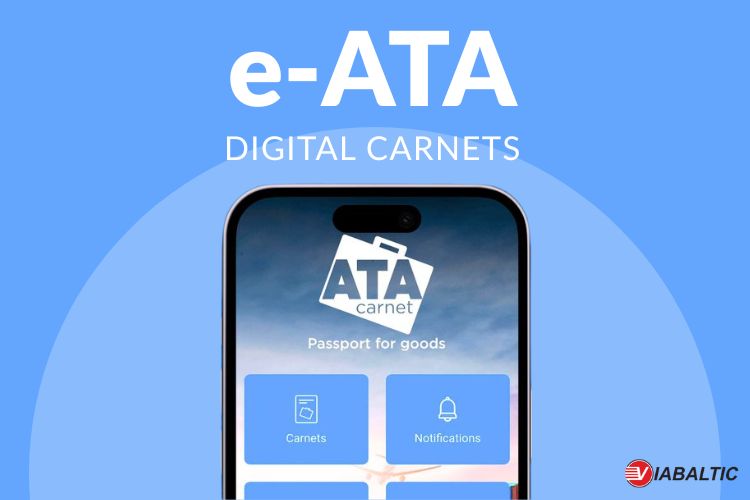
On 1 June 2026, Norway, the European Union, the United Kingdom and Switzerland began implementing the electronic ATA Carnet (e-ATA Carnet). In total, 30 countries and customs territories are participating in the initial rollout of the e-ATA Carnet system.This marks the gradual transition from traditional paper-based ATA Carnets to a digital solution.
An ATA Carnet is an international customs document that allows the temporary export and import of goods into participating countries without the payment of customs duties and import taxes.
It can be used for:
Once the event or activity has been completed, the goods must be re-exported and returned to their country of origin.
Traditionally, an ATA Carnet was issued as a paper booklet that had to be carried with the goods throughout the journey.
Each time the goods crossed a border, the carnet had to be presented to customs authorities. Proper documentation of all customs transactions was required to successfully close the ATA procedure.
An e-ATA Carnet is the electronic version of the traditional ATA Carnet.
Instead of carrying a paper document, the carnet is available in digital form. During customs clearance, a QR code is used to identify and validate the relevant customs transaction.
Not all ATA Carnet countries are ready to use electronic carnets.
A transition period has been established for 2026–2027, during which some countries will process e-ATA Carnets while others may continue to use paper carnets.
Before shipping goods under an ATA Carnet, businesses should verify the requirements applicable in all countries involved in their journey.
During the transition period until the end of 2027, businesses may encounter both electronic and paper ATA Carnets, depending on the countries involved in the temporary movement of goods.
In Norway, ATA Carnets are issued by authorized Chambers of Commerce, through the following application process:
Before crossing a border, the holder selects the relevant customs operation, such as:
A QR code is then generated for the specific transaction, and at the border, the customs officer scans the QR code and electronically which confirms the operation in the system.
As the e-ATA Carnet system is gradually implemented, businesses can expect less paperwork, faster border processing, easier document management, and improved visibility of customs transactions.
Link to the e-ATA App:
VIABALTIC NORGE AS
Hanekleiva Næringspark
Orhusveien 76 , 3070 Sande i Vestfold